Showing posts with label Bourbon. Show all posts

Monday, April 13, 2020

#295 Cocktail: Whiskey Sour

   The oldest historical mention of a whiskey sour was published in the Wisconsin newspaper, Waukesha Plain Dealer, in 1870.
    In 1962, the Universidad del Cuyo published a story, citing the Peruvian newspaper El Comercio de Iquique, which indicated that Elliott Stubb created the "whisky sour" in Iquique in 1872. (El Comercio de Iquique was published by Modesto Molina between 1874 and 1879.
     It is freakin' delicious !!!!
As a side note, if you have maple syrup, try to use that instead of simple syrup. It makes the cocktail soo much better

2 ounces bourbon or rye whiskey
1/2 ounce simple syrup
1 ounce fresh lemon juice
1 egg white


Saturday, March 28, 2020

#292 Cocktail: Whiskey Old-Fashioned

    The first documented definition of the word "cocktail" was in response to a reader's letter asking to define the word in the May 6, 1806, issue of The Balance and Columbian Repository in Hudson, New York. In the May 13, 1806, issue, the paper's editor wrote that it was a potent concoction of spirits, bitters, water, and sugar; it was also referred to at the time as a bittered sling. J.E. Alexander describes the cocktail similarly in 1833, as he encountered it in New York City, as being rum, gin, or brandy, significant water, bitters, and sugar, though he includes a nutmeg garnish as well.
    By the 1860s, it was common for orange curaƧao, absinthe, and other liqueurs to be added to the cocktail. The original concoction, albeit in different proportions, came back into vogue, and was referred to as "old-fashioned". The most popular of the in-vogue "old-fashioned" cocktails were made with whiskey, according to a Chicago barman, quoted in the Chicago Daily Tribune in 1882, with rye being more popular than Bourbon. The recipe he describes is a similar combination of spirits, bitters, water and sugar of seventy-six years earlier.
    The first mention in print of "old fashioned cocktails" was in the Chicago Daily Tribune in February 1880. However, the Pendennis Club, a gentlemen's club founded in 1881 in Louisville, Kentucky, claims the old fashioned cocktail was invented there. The recipe was said to have been invented by a bartender at that club in honor of Colonel James E. Pepper, a prominent bourbon distiller, who brought it to the Waldorf-Astoria Hotel bar in New York City.
    With its conception rooted in the city's history, in 2015 the city of Louisville named the old fashioned as its official cocktail. Each year, during the first two weeks of June, Louisville celebrates "Old Fashioned Fortnight" which encompasses bourbon events, cocktail specials and National Bourbon Day which is always celebrated on June 14.
Wikipedia

1 cube of sugar
3 dashes Angostura bitters
3 ounces bourbon or straight rye whiskey


Friday, May 3, 2019

#273 Cocktail: Stiletto

       Adapted from a recipe by Al Romeo of Anthony's, Huston, Texas.
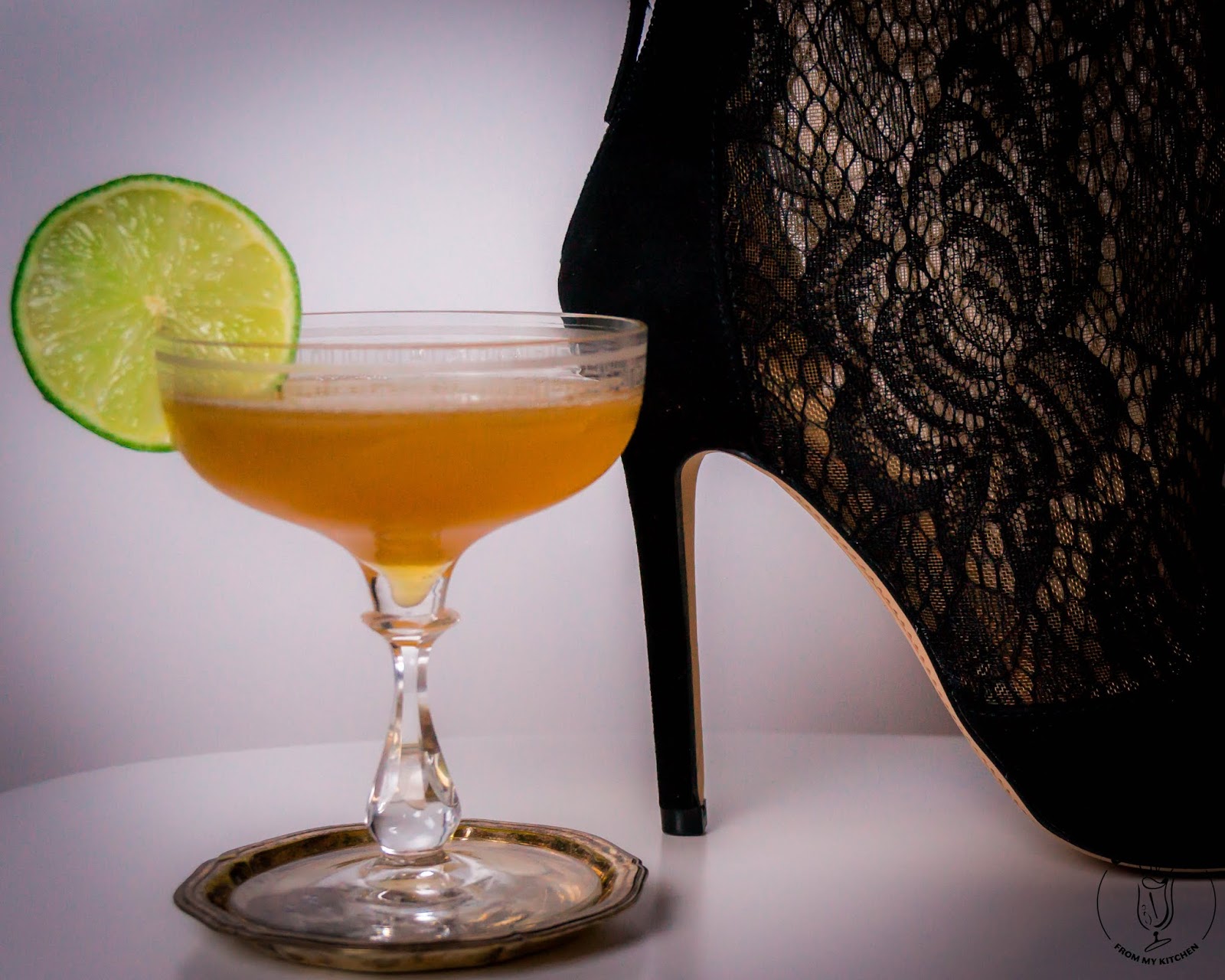
       The recipe is really interesting for it incorporates the lime in a bourbon cocktail. There are not so many cocktails out there where this combination is used.
       I can tell you that the whole recipe works really well and the drink is really delicious

2 ounces bourbon
1/2 ounce amaretto 
1/2 ounce fresh lime juice


Saturday, January 19, 2019

#257 Cocktail: Scofflaw

   According to Michael B. Quinion, publisher of www.worldwidewords.org, the word "scofflaw" came after the sum of 200 dollars was offered,in 1923, with whoever came up with the best word to describe "a lawless drinker of illegality made or illegally obtain liquor".
   The prize money was donated by a rich Prohibitionist who wanted to "stab awake the conscience" of those who drank alcohol during Prohibition
    The following year was reported in the Chicago Tribune that "Jock", a bartender at Harry's New York Bar in Paris, had created the Scofflaw Cocktail.

2 ounces bourbon or rye whiskey
1 ounce dry vermouth
1/2 ounce fresh lemon juice
1/4 ounce Grenadine
Angostura orange bitters to taste


Sunday, January 13, 2019

#256 Cocktail: Seelbach

      "For the last 20 years, if you were in the bar business and knew one thing about the bartender Adam Seger, it was that he was the man behind the Seelbach cocktail.
      The Seelbach is named after the Seelbach Hotel (today the Seelbach Hilton), a storied century-old lodging in downtown Louisville, Ky., that is mentioned briefly in “The Great Gatsby.” Shortly after being put in charge of the hotel’s bar and restaurant operations in 1995, Mr. Seger declared that he had discovered a recipe for a pre-Prohibition cocktail that was once the hotel’s signature drink. He tested it, liked it and put it on the menu.
        After two decades of yarn-spinning, Mr. Seger, 47, who left the hotel in 2001 and recently helped open the Tuck Room in downtown Manhattan, has decided to come clean that he concocted not only the drink but also the story behind it."
The New York Times

        The cocktail is beautifully delicious!!! The adding of the Cointreau gives a really nice orange flavor and the bourbon compliments it with a nice sweeteness. One of the most delicious champagne cocktails I ever had

 3/4 ounce bourbon
1/2 ounce triple sec
7 dashes Angostura bitters
7 dashes Peychaud's bitters
8 ounces Champagne


Sunday, September 30, 2018

#251 Cocktail: Remember the Maine

    A classic cocktail adapted from a recipe but Charles H Baker Jr., which insisted that, when making the drink, you should only stir clockwise.
    Charles H Baker Jr, an American journalist who counted Ernest Hemingway and Errol Flynn among his many friends, wrote for magazines such as Gourmet, Esquire and Town and Country, and was described by Margaria Fichtner, a columnist for the Miami Herald, as having an ‘unquenchable enthusiasm for what he called “the gentle art of imbibation”’.
    Baker writes in his 1939 book, The Gentleman's Companion: An Exotic Drinking Book.
(scotchwhisky.com)

2 ounces bourbon
3/4 ounce sweet vermouth
1/4 ounce cherry liqueur
absinthe to taste
Angostura bitters to taste


Wednesday, April 18, 2018

#240 Cocktail: Oriental

      The cocktail was adapted from a recipe in "The Savoy Cocktail Book" 1930, which also notes that an American man desperately ill with fever in the Philippines in 1924, gave the doctor who saved his life the recipe for this drink by way of thanks.
       The original recipe was made with rye whiskey, but Gaz Regan offered a choice of whiskey styles and also changed the adding of curacao to triple sec to cut a little the sweetness of the drink

1 1/2 ounce rye whiskey or bourbon
3/4 ounce sweet vermouth
3/4 ounce triple sec
1/2 ounce fresh lime juice


Wednesday, January 17, 2018

#234 Cocktail: A quick little pick-me-up

     Very, very tasty cocktail. A little sweet, a little sour with a smooth taste of mint which covers the taste of the bourbon.
       I don't know the year this cocktail was created, but I know it is created by Audrey Saunders, New York City's Libation Goddess.
      I put this cocktail in this strange glass which I received as a present from my brother

3/4 ounce Maker's Mark bourbon
1/4 ounce Branca Menta
1/2 fresh lemon juice
3/4 ounce simple syrup


Sunday, December 10, 2017

#232 Cocktail: Preakness

   "Ooooh, the weather outside is frightful,
     And this cocktail is so delightful"

  I thought about this when I was going home today, through a snow storm, to make this cocktail.
  Historians tell us that George Backert, head barman at Baltimore’s Emerson Hotel, invented the Preakness Cocktail as a contest entry. It seems the Pimlico racetrack owners were looking for a good evening cocktail to serve at the first Preakness Ball in 1936, and Backert’s simple twist on the classic Manhattan won the honor of becoming the first official cocktail of the afterparty. ( https://cold-glass.com )

2 ounces bourbon or rye whiskey 
1 ounce sweet vermouth
Benedictine to taste
Angostura bitters to taste


Sunday, February 19, 2017

#212 Cocktail: Mint Julep

       The mint julep originated in the southern United States, probably during the eighteenth century.
       Several aspects of the mint julep combine to mark its provider out as of the elite, beyond the mere ability to offer a drink: firstly, to have ice meant either ownership of an ice house or wealth to buy ice, an expensive commodity in the American south. Second, the traditional silver (not silver-plated) cup is a mark of wealth. Thirdly, one needed a servant to make and serve the drink, a trusty servant who could have access to your ice house, your whiskey, and your silver, a skilled servant who could produce the properly frosted cup.
        The mint julep has been promoted by Churchill Downs in association with the Kentucky Derby since 1938. Each year almost 120,000 juleps are served at Churchill Downs over the two-day period of the Kentucky Oaks and the Kentucky Derby, virtually all of them in specially made Kentucky Derby collectible glasses.
(Wikipedia)

3 ounces bourbon
1 or 2 ounces simple syrup or minted simple syrup


Friday, October 7, 2016

#200 Cocktail: Millennium

        The cocktail was created for the New Year\s Eve in 1999 by Gaz Regan and his wife, Mardee. It's a simple recipe, but the drink can be quite complex if enough bitters is added ( this ingredient really makes the cocktail come alive).
 2 1/2 ounce bourbon
1/2 ounce peach schnapps 
3 dashes angostura bitters


Friday, June 3, 2016

#183 Cocktail: Manhattan

    This one is one of the 3 cocktails that are my all time favorite. The other 2 are Martini and Old-Fashioned.
     A popular history suggests that the drink originated at the Manhattan Club in New York City in the early 1870s, where it was invented by Dr. Iain Marshall for a banquet hosted by Jennie Jerome (Lady Randolph Churchill, mother of Winston) in honor of presidential candidate Samuel J. Tilden. The success of the banquet made the drink fashionable, later prompting several people to request the drink by referring to the name of the club where it originated—"the Manhattan cocktail". However, Lady Randolph was in France at the time and pregnant, so the story is likely a fiction.
     However, there are prior references to various similar cocktail recipes called "Manhattan" and served in the Manhattan area. By one account it was invented in the 1860s by a bartender named Black at a bar on Broadway near Houston Street.
     The original "Manhattan cocktail" was a mix of "American Whiskey, Italian Vermouth and Angostura bitters". During Prohibition (1920–1933) Canadian whisky was primarily used because it was available.
      An early record of the cocktail can be found in William Schmidt's "The Flowing Bowl", published in 1891. In it, he details a drink containing 2 dashes of gum (gomme syrup), 2 dashes of bitters, 1 dash of absinthe, 2/3 portion of whiskey and 1/3 portion of vermouth.

2 ounces bourbon or straight rye whiskey
1 ounce sweet vermouth
2 dashes orange bitters


Saturday, February 27, 2016

#176 Cocktail: Lewis & Martin

   Another drink made after a recipe from Ted Haigh, Dr. Cocktail, of Los Angeles. As Gaz Regan says, this is a very complex potion and even if the cocktail contains only liqueurs , and by the rule it should be stirred, the author shakes this one. When asked about this incorrect methodology, Doc said " You know me, I'm a savage. I shake everything"

2 ounces bourbon
1 ounce Lillet Blanc
3/4 ounce creme de banane
2 dashes Peychaud's bitters


Friday, February 12, 2016

#174 Cocktail: Kentucky Squirrel

   This enters in Gaz Regan's category of "squirrel drinks, meaning it is made using creme de noyau, and of course, by using bourbon, it can only be Kentucky.
   There are not so many things that I can say about this drink, because it doesn't have a history or a special event for creating the cocktail. It is just Gaz Regan playing with liquors and creating new cocktails all the time.

1 1/2 ounce Bourbon
3/4 ounce creme de noyau
1/2 ounce fresh lemon juice


Sunday, January 24, 2016

#171 Cocktail: Kentucky Longshot

    It is a delicious, peach flavour, drink and I think that is one of the best cocktails for those who do not like bourbon, but still want to try some. I say that because that taste of the bourbon is way in the back of the flavours covered by the peach liqueur and the ginger one.
    The cocktail was created in 1998 by Max Allen Jr. in the Seelbach Hilton Hotel in Louisville, Kentucky and it was created as the signature drink for the 1998 Breeder's Cup

2 ounces bourbon
1/2 ounce ginger liqueur 
1/2 ounce peach brandy 
1 dash Angostura bitters
1 dash Peychaud's bitters


Monday, December 14, 2015

#165 Cocktail: John Collins

   The John Collins is a Collins cocktail made from gin, lemon juice, sugar and carbonated water. A recipe for a John Collins is featured in the Steward and Barkeeper's Manual of 1869:

Teaspoonful of powdered sugar
The juice of half a lemon
A wine glass of Old Tom Gin
A bottle of plain soda
Shake up, or stir up with ice. Add a slice of lemon peel to finish.

   Drinks historian David Wondrich has speculated that the original recipe that was introduced to New York in the 1850s would have been very similar to the gin punches that are known to have been served at London clubs such as the Garrick during the first half of the 19th century. He states that these would have been along the lines of "gin, lemon juice, chilled soda water, and maraschino liqueur".  (Wikipedia)
     "Most of the books agree that this drink was originally made with geneva gin as a base, but these days bourbon is usually the spirit of choice" (Gaz Regan)

2 1/2 ounces bourbon
1 ounce fresh lemon juice
3/4 ounce simple syrup
club soda


Sunday, October 4, 2015

#157 Cocktail: Hot Toddy

   Feeling sick? Get a Hot Toddy! Will help you a lot.
The Hot Toddy is a simple winter drink prepared with liquor, hot water, honey and spices.
   The Dublin-born physician, Robert Bentley Todd (1809–1860), was known for his prescription of a hot drink of brandy, canella (white cinnamon), sugar syrup and water. This was called a "Hot toddy".
    It has also been suggested that the name comes from the toddy drink in India, produced by fermenting the sap of palm trees. The term could have been introduced into Scotland by a member of the East India Company.
    Despite the theories, the history of this drink is uncertain. One thing remains certain, it get's you warm.

3 whole cloves
1 cinnamon stick
1 tspn honey
4-5 ounces boiling water
2 ounces bourbon, scotch, brandy, rye
freshly grated nutmed


Sunday, May 24, 2015

#103 Cocktail: Deadly Sin

  This cocktail is adapted from a recipe by Rafael Ballesteros of Spai, a member of DrinkBoy community board of cocktilians.
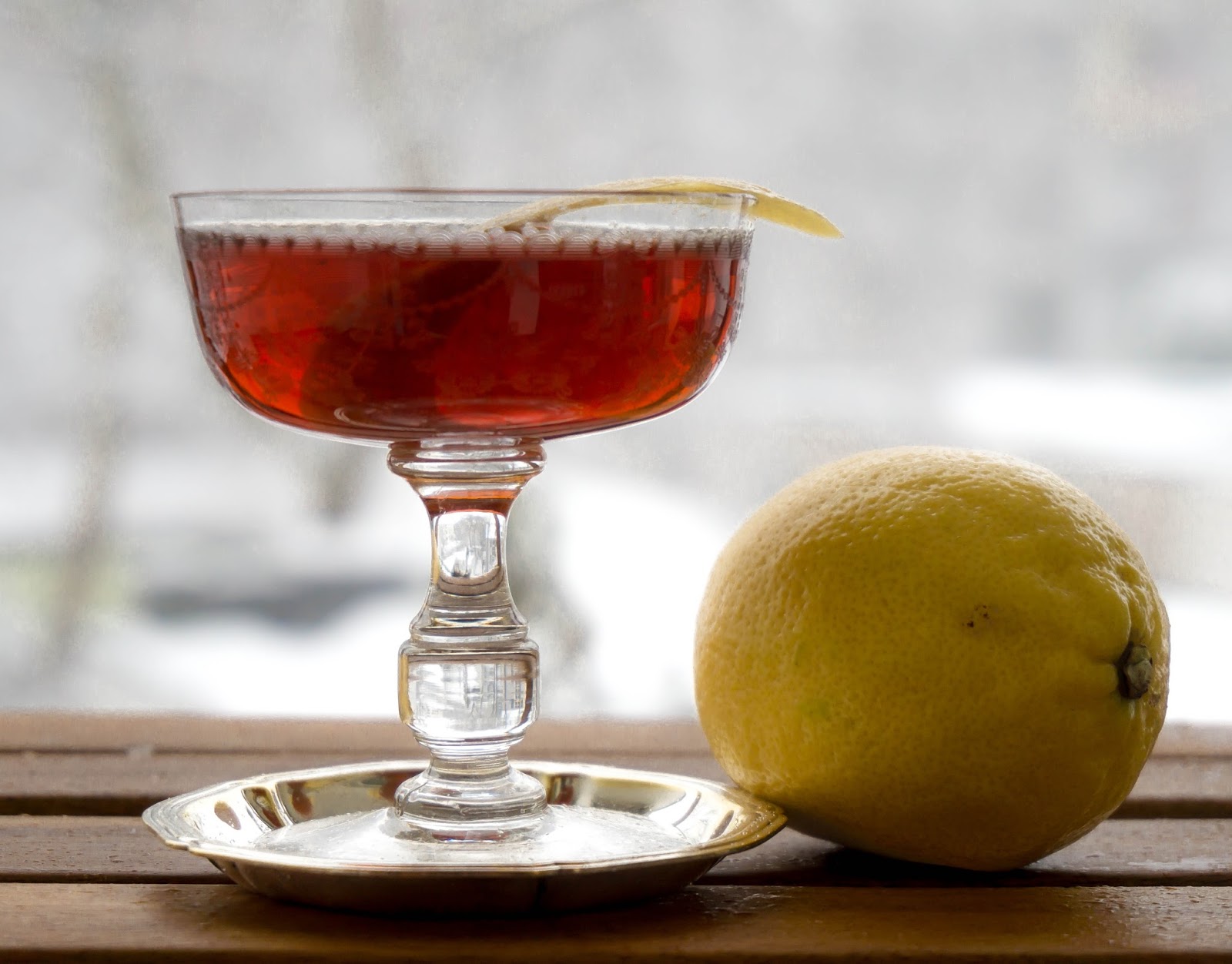
   The cocktail has a powerful hint of orange from the bitters and the orange twist dropped in the glass, which compliments the mellow taste of bourbon. I can say that the drink is a twist on classic cocktail, the Manhattan, by adding a tinny drop of maraschino liqueur and use less sweet vermouth.
    For the people who love the Manhattan, the Deadly Sin can be a nice alternative

2 ounces Bourbon
1/3 ounce sweet vermouth
1/2 maraschino liqueur
1 dash orange bitters


Sunday, February 8, 2015

#26 Cocktail: Bourbon Peach Cobbler

  No history for this one. All I can say is that is kinda strong. If you are not used with strong cocktails, you might want to try putting only 2 ounces of bourbon.....Or not try it at all. It'y like whiskey on the rocks with a slightly taste of peach

3 ounces bourbon
1 ounce peach schnapps


Thursday, January 22, 2015

#9 Cocktail: Arawak

    The Arawak are a group of indigenous peoples od South America and historically of the Caribbean.
     The Arawak cocktail was created by Gaz Regan for the Trotter bar in Trinidad and it's a variation of the Algonquin cocktail.
     It is not -one of my favorite cocktails out there, but it is not bad at all. The predominant taste is  the bourbon but you can feel in coming from the back the pineapple and the tamarind flavors.
    From what I know, this is the only cocktail (from what I've seen) the uses the tamarind juice.

2 ounces bourbon
1/2 dry vermouth
1/4 pineapple juice
1 dash tamarind juice
Angostura bitters to taste (I used 2 dashes)
1 pineapple cube, for garnish